

Why Hang Tags and Bookmarks Punch Above Their Weight
Highest brand-touch-per-dollar in packaging. A custom die-cut tag costs a few cents but sits on the product in the store, carries your story at the moment of decision, and stays on the product after purchase — tied to a jam jar, knotted around a candle, threaded through a garment. No other branded item delivers that many impressions per cent.

The shape is free. This is the point most buyers miss. Because every tag is cut with a steel-rule die, a circle, an arch, a scalloped flower or your own silhouette costs the same as a plain rectangle of the same footprint — as long as the shape fits inside its bounding circle. Your shape choice is a differentiator you get for free; use it.
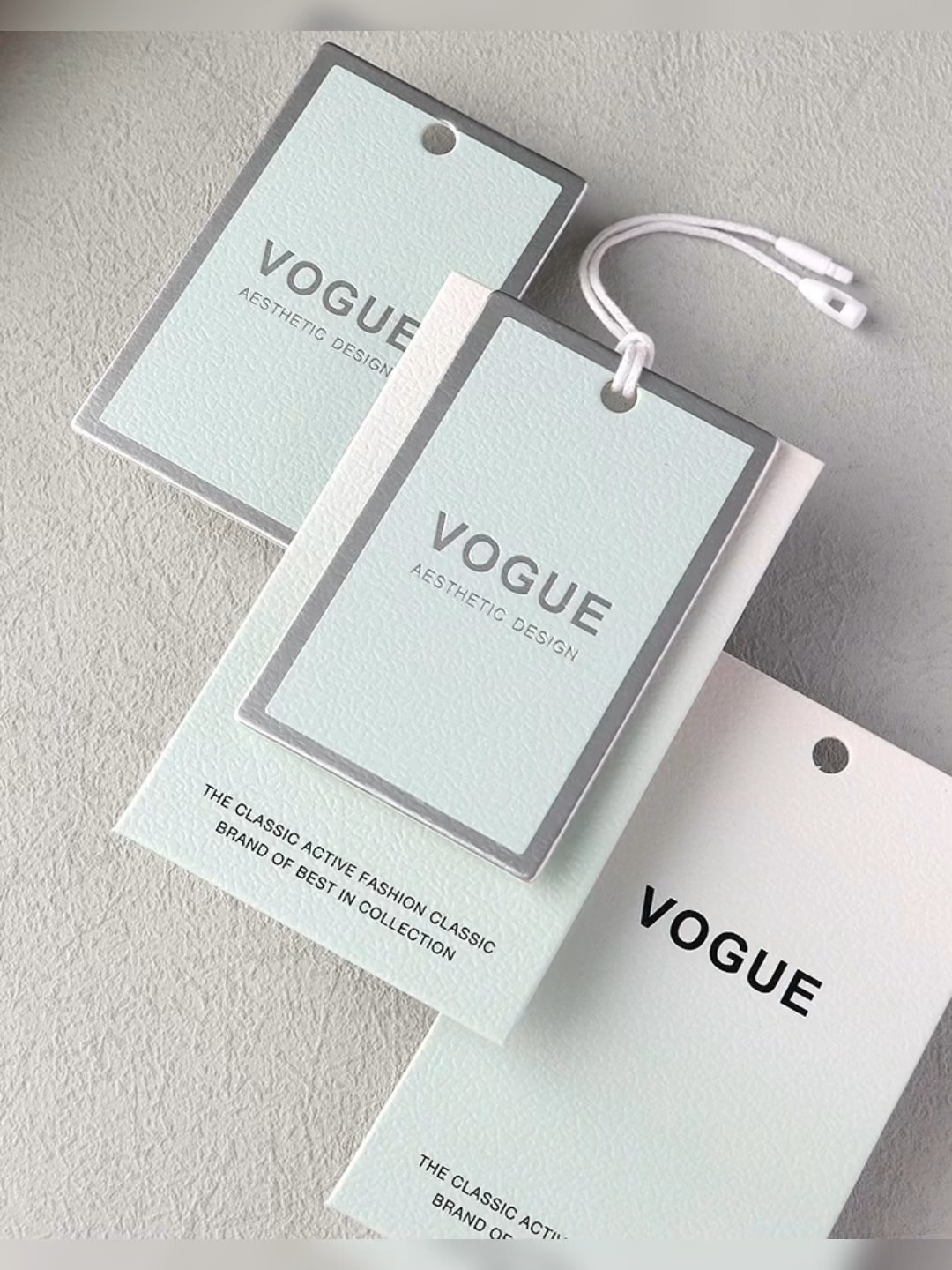
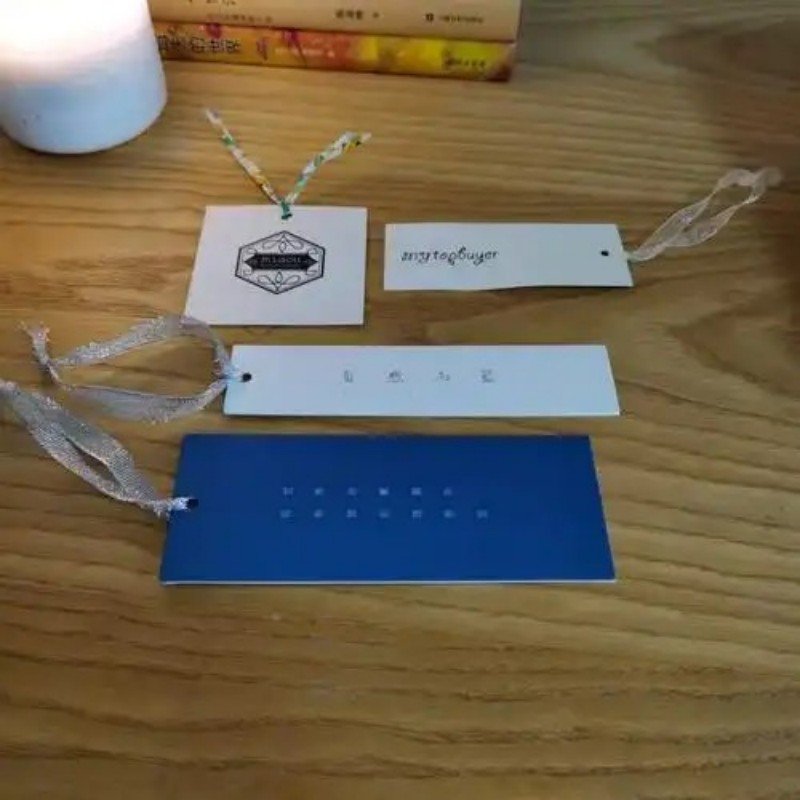
Bookmarks are keepsakes, not disposables. A bookmark with a beautiful foil or letterpress design is used daily for months. Bookstores, publishers, weddings, museums and brands use them as functional marketing — the recipient advertises your brand every time they open the book. The image above shows exactly this formula: tactile board, botanical letterpress, restrained gold foil, natural cords.
Specifications
| Attribute | Detail |
|---|---|
| Product | Custom die-cut paper hang tags & bookmarks, single- or double-sided |
| MOQ | 300 pcs per design (mixed shapes of the same size board on request) |
| Board options | Natural kraft 250–400 gsm · white/colour cotton board 300–600 gsm · art card 250–350 gsm · recycled & FSC boards · seed paper |
| Size range | 30×40 mm jewellery tags up to 148×210 mm (A5) oversized tags; bookmarks typically 40–55 × 150–210 mm |
| Shape | Any die-cut silhouette; free dieline service; custom shapes at no shape surcharge |
| Printing | CMYK offset, Pantone spot colours, single colour to full coverage, double-sided |
| Finishing | Hot foil (gold / silver / rose gold / copper / holographic), blind letterpress deboss, emboss, spot UV, matte/gloss lamination, soft-touch coating, edge painting, gilded edges |
| Hole & reinforcement | Round / oblong punch, standard 3–5 mm; optional metal eyelets (gold, silver, black, brass) |
| Strings & cords | Jute twine 1–2 mm, cotton cord, waxed cotton, elastic loop, leather-look cord, satin ribbon, leather ties |
| Assembly | Strings pre-threaded and knotted before shipping |
| Variable data | Barcodes (GS1), prices, sizes, sequential numbering, QR codes |
| Ink | Soy-based, low-migration; food-contact declaration available on request |
| Eco options | Recycled, FSC, seed paper, plastic-free strings, recycle logo printing |
| Artwork | AI / PDF / EPS; free dieline & pre-press check; printed proof or pressed sample before bulk |
| Lead time | 7–10 days (digital) · 12–18 days (foil / letterpress / custom die) after artwork approval |
| Shipping | Express 5–8 days · sea 25–35 days · tags ship flat, strings tucked, in moisture-barrier cartons |
| Dies | Steel-rule dies stored free of charge, reused at zero cost on reorders |
| Payment / Incoterms | T/T, PayPal; EXW / FOB Ningbo–Shanghai / DDP on request |
Shape & Die-Cut Options
Every shape below is a standard die-cut. The photo at the top of this page shows our most-ordered silhouettes:
| Shape | Best for | Notes |
|---|---|---|
| Classic rectangle, clipped corners | Apparel, jewellery, general branding | The workhorse; cheapest string hole placement, fits size/price on reverse |
| Arch / tombstone | Botanical & artisan brands, wedding favours | Soft silhouette pairs with letterpress florals (see image, top row) |
| Circle & scalloped round | Jam & honey jars, candles, bake sale tags | Ties flat against jar necks; scallop adds handmade feel at no extra cost |
| Hexagon | Honey, cosmetics, apothecary | Hex die matches hex jars and caps visually |
| Leaf / botanical silhouette | Tea, skincare, eco brands | Custom outline shapes cost the same as standard if within footprint circle |
| Door-hanger | Hotels, local marketing | Includes standard 55 mm door hole die |
| Bookmark strip, scalloped or clipped | Bookstores, publishers, weddings, brand gifts | 40–55 × 150–210 mm; rounded corners standard; tassel optional |
| Fully custom silhouette | Brand mascots, product outlines | Send a sketch — we return a dieline in 24 h, free |
Standard Sizes
| Size (mm) | Typical use | String hole |
|---|---|---|
| 30 × 40 / Ø30 | Jewellery, earrings, mini candles | 3 mm, centred or corner |
| 40 × 70 / Ø50 | Soap, small cosmetics, jam jars | 4 mm |
| 50 × 80 | Apparel, gift boxes, bakery | 5 mm, optional eyelet |
| 60 × 100 / Ø70 | Premium gifts, wine & bottles | 5 mm + eyelet recommended |
| 90 × 140 (A6-ish) | Oversized statement tags, luggage-style | 5 mm + brass eyelet |
| 45 × 180–200 | Bookmarks (standard book format) | No hole, or 4 mm + tassel |
| 52 × 210 | Oversized keepsake bookmark / invitation band | No hole; rounded corners |
Other sizes are die-cut to order at no size surcharge within the same board. Custom size + shape = just send the dieline request.
Board & Thickness Guide
| Board | Weight | Character | Choose when… |
|---|---|---|---|
| Natural kraft | 250–400 gsm | Warm, fibrous, eco look; prints beautifully with one-colour + foil | You want the organic, artisan aesthetic (like the kraft tags in the photo) |
| Colour cotton board | 300–600 gsm | Dense, velvety surface — the letterpress board | You want blind deboss or deep letterpress (navy, forest, blush tags in photo) |
| Art card (C1S/C2S) | 250–350 gsm | Smooth, full CMYK photographic printing | Full-colour artwork, product photos, gradients |
| Recycled / FSC kraft | 250–350 gsm | Compliance-friendly, visible flecks | EU/UK retail, eco claims, seed-paper alternatives |
| Seed paper | ~250 gsm | Embedded herb/wildflower seeds; plantable | “The tag is the gift” campaigns — plant it, it blooms |
Thickness quick rules
- 250–300 gsm: swing tags on light apparel, jar tags, event labels — flexes slightly, fine for stapling.
- 300–400 gsm: the sweet spot for most hang tags and all bookmarks. Feels substantial, survives handling.
- 400–600 gsm cotton: premium tags and letterpress. Below 400 gsm, letterpress depth is barely visible.
- Bookmark baseline: 350 gsm + rounded corners + matte lamination if it will be handled daily.
Printing & Finishing Menu
| Technique | Effect | Best paired with |
|---|---|---|
| Hot foil stamping | Metallic film pressed in with heat — gold, silver, rose gold, copper, holographic, matte black | Kraft (gold botanicals like the photo), cotton board logos, borders |
| Blind letterpress / deboss | Artwork pressed into the board, no ink — carved, tactile, quiet luxury | 400–600 gsm cotton board; florals, monograms, patterns |
| Emboss (raised) | Artwork raised from the surface | Logos on art card; pairs with foil |
| Pantone / CMYK print | Exact brand colours or full-colour artwork, both sides | Any board; Pantone spot for brand-critical colour |
| Edge painting | Tag edges painted in a solid colour or gold | Thick cotton board 500–600 gsm; striking on navy/blush |
| Spot UV | Glossy raised varnish on selected areas | Logo highlight over matte lamination |
| Lamination / soft-touch | Scuff resistance; soft velvety feel | Bookmarks, tags handled in retail |
| Eyelets & corner rounding | Metal grommets; R3–R6 corners | Heavy tags, bookmarks (corners), apparel |
Hole, Eyelet & String Engineering
Tags fail at the hole, not at the print. Three rules keep them intact:
- Distance the hole from the edge. Minimum 5 mm from edge to hole edge (6 mm on 400+ gsm board). Closer than that and the paper crescent tears when the tag swings.
- Add an eyelet for load or friction. Anything tied to a gift box that gets carried, or an apparel tag that gets pulled on and off in stores, should have a metal eyelet. It is a fraction of a cent and eliminates the #1 QC complaint.
- Match cord to use. Jute twine (1–2 mm) for the rustic look and jam jars; waxed cotton for premium apparel (holds its knot); elastic loops for bakery and flowers (no knotting at point of sale); leather-look cord for bottles.
All strings are pre-threaded and knotted before packing — your team or the retail store attaches tags straight out of the box, no assembly step.
How Your Tags Are Made (10 Steps)
- Dieline & quote — send shape sketch or logo; we return a free dieline and quote within 24 h.
- Artwork proof — flat proof for layout, colours, barcode placement; you approve in writing.
- Plate & die — printing plate + steel-rule die made; 1–3 days; stored free for reorders.
- Sample — for foil/letterpress orders, a pressed sample photo (or mailed sample) for approval before the run.
- Printing — offset or digital by quantity; Pantone inks batch-mixed and logged for reorder consistency.
- Finishing — foil, letterpress, emboss, lamination, spot UV, edge painting in-house.
- Die-cutting — shapes and holes punched; corners rounded.
- Eyeletting & stringing — eyelets pressed, cords threaded and knotted by hand.
- QC — pull test on stringed tags (a sample from each batch is tugged at rated force), colour check under D50 light, hole-tear inspection.
- Pack & ship — flat-packed in bundles of 100, moisture-barrier lined, rigid carton.
Using & Attaching Your Tags
- Store flat, dry, away from sunlight — cotton board fades and kraft darkens in UV.
- Match cord to product weight — pre-knotted jute for jars and boxes; elastic loop where staff attach hundreds per hour.
- Apparel: tag + plastic fastener or safety pin at the care label seam; keep price on reverse for easy removal.
- Food jars & candles: tie at the neck with a chafe band or direct twine; tag sits against the glass, never the food.
- Bookmarks: ship with a belly band or in a cello/OPP sleeve to keep edges pristine on the shelf.

Applications
| Industry | What we supply |
|---|---|
| Apparel & fashion | Brand + size + price tags, matching size chips, barcode reverse, eyelets, waxed cords |
| Food & artisan (jam, honey, bakery) | Neck tags, kraft + foil, seed-paper options, soy inks, jar-tied cords |
| Candles & home fragrance | Round/ scallop neck tags, warning-text reverse printing |
| Jewellery | Mini tags 30×40 mm, fine cords, branded reverse |
| Bookstores, publishers, weddings | Keepsake bookmarks — letterpress + foil on cotton board, tassels, matching invitation sets |
| Corporate & events | Gift tags, luggage tags, plantable seed-paper tags, door hangers |
Hang Tags vs Sticker Labels vs Woven Labels
| Dimension | Hang tag / bookmark | Sticker label | Woven label |
|---|---|---|---|
| Unit cost (300+ pcs) | US$0.05–0.80 | US$0.02–0.15 | US$0.10–0.60 |
| Brand storytelling space | Both sides, 30 cm² – A5 | Limited by product curvature | Very small |
| Tactile finishing (foil, letterpress, edge paint) | Full menu | Spot UV / foil only | None |
| Shape freedom | Any silhouette | Any, but hugs the surface | Rectangular only |
| Keepsake / reuse value | High (bookmarks kept for months) | Low — thrown away with wrapper | Stays in garment |
| Application speed at POS | Tie / fasten — slower | Peel & stick — fastest | Sewn in production |
| Barcode / price variable data | Printed on reverse | Thermal overprint standard | N/A |
| Regulatory text (care, ingredients) | Limited space | Standard choice | Standard for apparel care |
| Perceived value lift | Strongest — signals premium | Neutral | Hidden |
| Best role | Brand moment + gift-wrapping + keepsakes | Compliance + variable data + high-volume | In-garment identification |
Practical answer: they’re not competitors. Use stickers for regulatory and variable data, woven labels inside garments, and hang tags as the brand layer on top — the piece the customer reads, feels and keeps. We supply all three in one order so colours and boards match.
Frequently Asked Questions
What is the minimum order quantity?
300 pieces per design. Tag dies are inexpensive steel-rule dies and our digital-plus-offset short-run workflow makes a 300-piece run economically viable — most suppliers require 1,000+. Dies are stored free and reused at zero cost. Unit prices drop meaningfully at 1,000 and 3,000 pieces.
Can you cut any shape I want?
Yes — arches, circles, scallops, hexagons, leaves, door hangers and fully custom silhouettes all die-cut at no shape surcharge for the same footprint. Send a sketch or logo and we return a free dieline within 24 hours. Keep the silhouette inside its bounding circle to optimise die cost.
Do the tags come with strings attached?
Yes, supplied and pre-threaded: jute twine, cotton cord, waxed cotton, elastic loops, leather-look cord or satin ribbon. Reinforced holes are standard; metal eyelets recommended for anything carried or pulled repeatedly.
Are the bookmarks suitable as keepsakes?
Yes — 350–400 gsm baseline, rounded corners, optional matte or soft-touch lamination for daily handling. Letterpress + foil on cotton board is the most popular keepsake combination for bookstores, weddings and brand gifts.
Can you print barcodes and prices on apparel tags?
Yes — GS1-compliant barcodes, sizes, prices and care text on the reverse. We can supply matching size chips and care labels in the same order so the whole garment labelling set ships colour-matched.
What is the difference between foil stamping and letterpress?
Foil presses a metallic or pigment film into the paper with heat — it catches light and suits logos and borders. Letterpress debosses the artwork into thick board (300 gsm+) without ink — tactile, carved, understated. Premium tags often combine both: debossed pattern, foil logo.
Is the paper food-safe for jam jars and bakery?
Tags are not designed for direct food contact, but soy-based low-migration inks are standard and food-contact-declaration paper is available if tags may touch food surfaces. Tie tags to the packaging, not the food.
What is the lead time?
Digital orders 7–10 days after artwork approval; foil/letterpress/custom-die orders 12–18 days including a pressed sample approval. Express freight 5–8 days, sea 25–35 days.
Do you offer eco-friendly options?
Recycled and FSC boards, cotton offcut board, plantable seed-paper tags, plastic-free strings, and recycle-logo printing — useful for EU/UK retail compliance.
OEM & Our Services
JAJA Packing is a packaging supply-chain integrator based in Huzhou, China, coordinating 1,200+ audited partner factories. One order covers design, print, finishing and freight — with one contact and one invoice.
| Service | Detail |
|---|---|
| Free dieline & shape optimisation | Sketch or logo → printable dieline in 24 h, bounding-circle cost check included |
| MOQ | 300 pcs per design; mixed shapes on same board negotiable |
| Sampling | Printed proof or pressed physical sample before bulk; sample photos within 48 h |
| Colour management | Pantone spot batch-logging for reorder consistency; D50 light QC |
| Matching sets | Tags + boxes + stickers + labels in one order, colour-matched |
| Reorders | Dies, plates and artwork stored free — reorder in one message |
| Compliance | GS1 barcodes, FSC, food-contact declarations on request |
| Shipping | EXW / FOB Ningbo–Shanghai / DDP; consolidated with your box orders to save freight |
Contact: sales1@jajapacking.com · WhatsApp +86 131 2388 3167