
Product Description
This is a food-contact PET bottle — the default container of the modern beverage and liquid-food world, and the bottle in our photos is exactly why: crystal clarity that shows the product, a neck and cap system that seals and recloses, and a weight a courier can love. Square bodies pack 20–25% more per shelf metre and per carton; round bodies carry the classics. From a 100 ml sauce bottle to a 1.5 L juice bottle, the shape, capacity, colour and branding are all yours to specify — and stock mold designs start from a single piece.
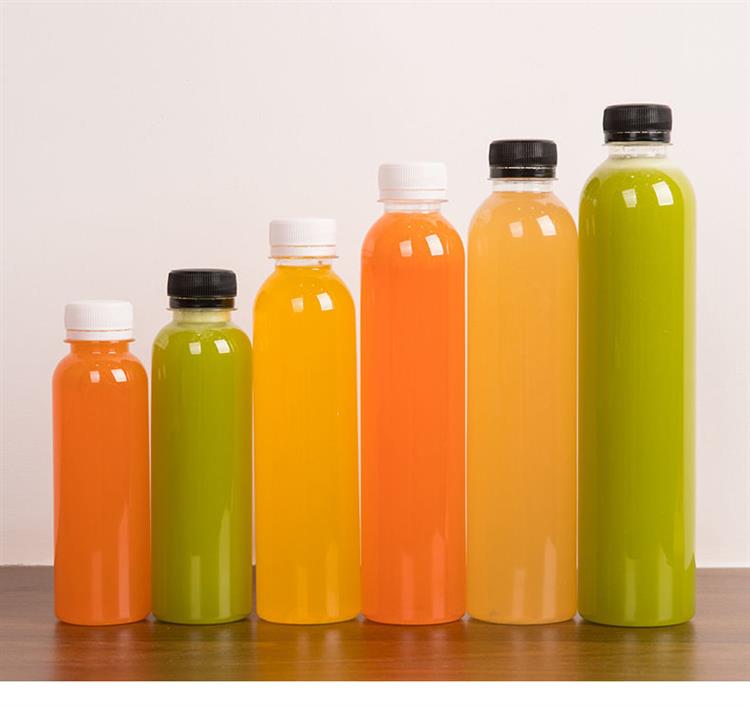
Everything is configurable. Grade first: standard cold-fill PET for room-temperature and chilled filling, or crystallised hot-fill PET that takes 85–95 °C fill temperatures for juice, tea and sauces without the walls vacuum-paneling. Shape next: square, round, oval, grip-profiled or fully bespoke from a new mold. Decoration by direct screen print (1–3 colours, clean and minimal) or full-body shrink sleeve (360-degree photographic branding that also blocks light). Closures are matched to the neck finish and supplied with the bottle: screw caps with tamper-evident bands, flip-top and sports caps for on-the-go drinks, disc-top and pump caps for syrups and oils.
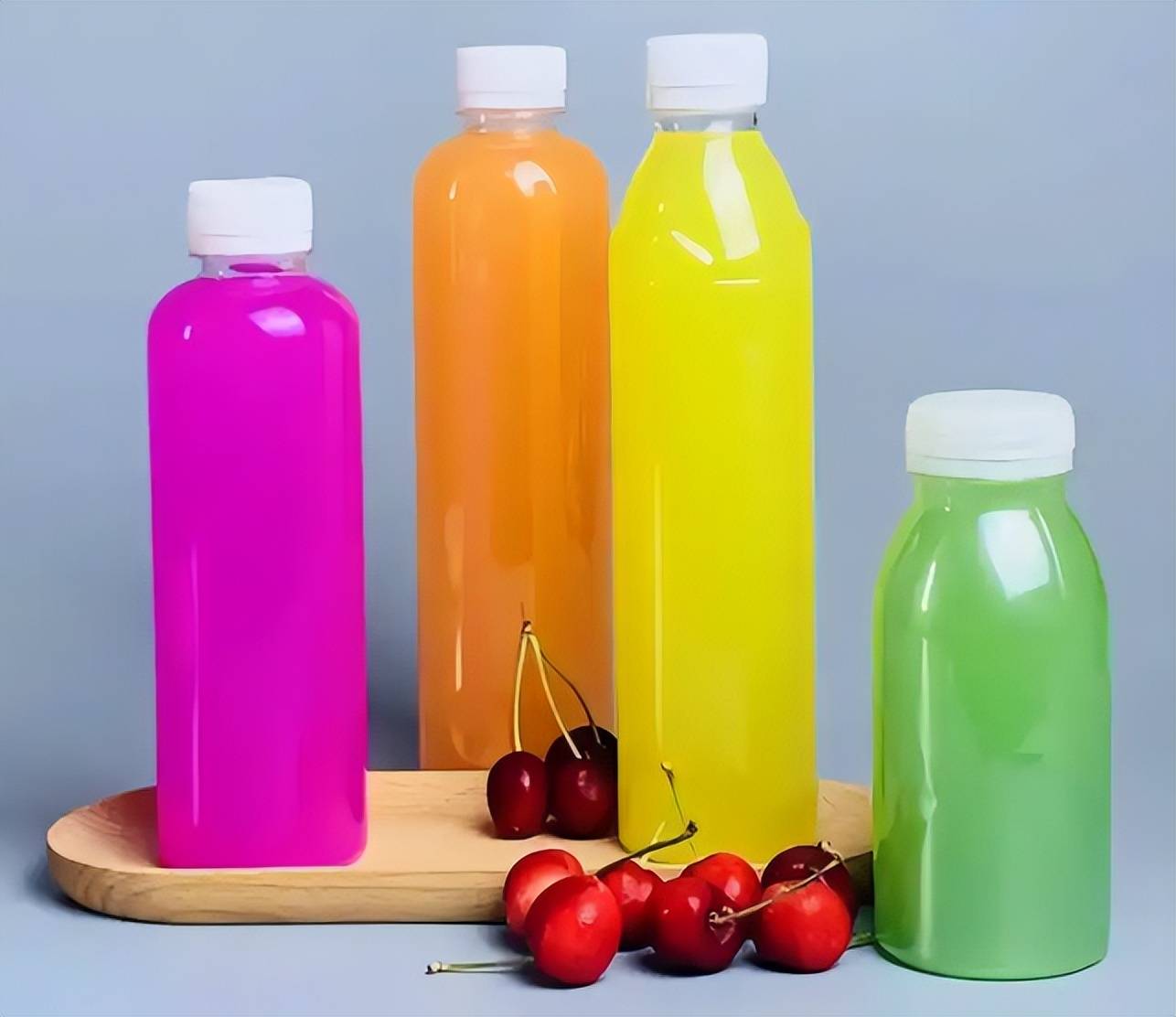
Our MOQ is 1 piece on stock-mold bottles, for the same reason it works in glass: bottle factories hold catalogs of hundreds of existing blow molds, and producing from an existing mold carries no tooling cost. One bottle is enough to test the fit on your filling line, ship samples to a co-packer, or launch a micro-batch. A fully bespoke shape needs a new mold — we quote the break-even honestly, and more often than not we can get you to a proprietary look with a stock bottle plus a custom sleeve, with zero tooling.

Key Features Explained
- 1-piece MOQ on stock molds — test line compatibility and shelf presence before committing to volume; reorder scales on the same mold.
- Glass-like clarity at one-eighth the weight — PET shows the product as well as glass while cutting freight weight dramatically and eliminating breakage risk entirely. For e-commerce liquid products this is usually the decisive argument.
- Shatterproof and seal-tight — no glass in the production environment, no breakage claims, and a tamper-evident closure system customers recognise instantly.
- Cold-fill and hot-fill grades — standard PET for chilled and ambient products; crystallised heat-set PET for 85–95 °C hot filling. We specify the grade from your fill temperature, not the other way round.
- Square-body shelf economics — square bottles pack roughly 20–25% more units per shelf metre and per shipping carton, which compounds across retail margins and e-commerce freight.
- Code-1 recyclability — PET is the most recycled plastic in the world; rPET content available for brands with recycled-content commitments.

Full Specifications
| Parameter | Specification |
|---|---|
| Material | Food-grade PET (cold-fill standard; crystallised hot-fill grade); rPET content on request |
| Food compliance | FDA 21 CFR, EU LFGB; food-contact documentation supplied |
| Capacity range | 100 ml – 1,500 ml (stock molds); custom capacities by new mold |
| Shapes | Square / rectangular, round, oval, grip-profiled, Boston-style, bespoke |
| Neck finishes | 28 mm PCO 1881 / 1810 (beverage), 38 mm (wide), 24/410, 28/410 and other screw finishes (sauces, oils, syrups) |
| Thermal grades | Cold-fill: fill up to ~60 °C. Hot-fill grade: 85–95 °C fill with vacuum-panel resistance; cold-averse panel design available |
| Closures | Screw caps with tamper-evident band, flip-top, sports/pull-push, disc-top, pump; PP/HDPE with food-grade liners; stock colours or Pantone-matched |
| Barrier options | Standard PET, UV-blocking additive, opaque/white PET; multilayer high-barrier for oxygen-sensitive fills on request |
| Decoration | Direct screen print (1–3 colours), full-body shrink sleeve (360° full colour), pressure-sensitive labels, mold embossing (custom mold) |
| MOQ | 1 pc on stock molds; bespoke shape by new mold (typically ~10,000–20,000 pcs break-even, quoted per design) |
| Samples | Single-bottle samples, shape sample sets with matched caps, printed/sleeved samples, line-trial samples |
| Packing | Nested in export cartons with layer pads; caps pre-fitted or packed separately; drop-test packed |
| Lead time | Stock molds 7–15 days (sleeves +3–7 days, screen print +3–5 days); custom mold 30–40 days including tooling |
| Shipping | Sea freight from Shanghai / Ningbo; worldwide export |
| Price range | US$0.08–0.85 / pc depending on capacity, shape, grade and decoration |
Why PET for Liquid Food Packaging
PET — polyethylene terephthalate — wins liquid food packaging on a combination no competitor matches at its price. Understanding its four properties tells you when to specify it:
1. Bottle-glass clarity, courier-proof reality
PET is the only mainstream packaging plastic with true glass-like transparency. The customer sees the actual juice, tea or sauce — colour, pulp, texture — which is a sales argument in itself. And unlike glass, it shrugs off drops from forklifts, courier networks and customers’ hands. Zero breakage claims, zero glass-in-product risk for your HACCP file.
2. Weight that compounds
A 500 ml PET bottle weighs 20–30 g where its glass equivalent weighs 300–450 g. That ratio cascades through everything: cheaper inbound freight, cheaper export freight, cheaper last-mile shipping for e-commerce, lower carbon accounting, and shelf-weight allowances in retail fridges that glass cannot meet.
3. The “O” — orientation is strength
PET bottles are not injection-moulded like caps; they are stretch-blown. The preform is stretched lengthwise and blown radially, orienting the polymer chains into a thin wall with remarkable strength, clarity and gas barrier — a 25 g bottle holding 1.5 L is a feat of orientation, not thickness. This is also why wall thickness is not the knob to turn for more strength: shape and grade are.
4. The most recycled plastic on earth
PET is code-1 resin — the most established recycling stream in the world, with bottle-to-bottle food-grade rPET now standard in major markets. For brands with recycled-content or EPR obligations, rPET versions of the same bottles are available; tell us your target percentage at quoting.

Shape & Style Options — Square vs. Round
| Shape / Style | Typical Use | Commercial Logic | Relative Cost |
|---|---|---|---|
| Square / rectangular (like our photo set) | Juice, tea, cold brew, sauces, e-commerce liquids | +20–25% units per shelf metre and per carton | Low (common stock molds) |
| Round (beverage standard) | Water, juice, carbonated-ready lines | Best pressure resistance, classic hand-feel | Lowest |
| Octagonal / faceted | Premium juice, flavoured water | Grip + shelf distinction | Low–medium |
| Boston / syrup style | Syrups, cordials, oils, mixers | Bar and café signal | Low |
| Grip-profiled sports | Sports drinks, on-the-go | Handling and cap-system pairing | Medium |
| Mini / portion (100–250 ml) | Sauces, shots, kids’ drinks, hotel retail | Portion economics, trial size | Low |
| Bespoke mold shape | Brand-owning silhouette | Unique — cannot be copied off-catalog | Mold tooling, quoted |
Capacity & Neck Finish Guide
| Capacity | Typical Fill | Common Neck | Typical Products |
|---|---|---|---|
| 100–250 ml | Sauce portion, juice shot | 24/410, 28/410 screw | Sauces, syrups, cold-press shots, kids’ drinks |
| 300–350 ml | Single-serve juice/tea | 28 mm PCO 1881 | Chilled juice, tea, flavoured water |
| 450–500 ml | Standard single serve | 28 mm PCO 1881 / 1810 | Juice, tea, water, sports drinks |
| 750–830 ml | Share size, café retail | 28 mm PCO 1810, 38 mm | Cold brew, cordials, dressings |
| 1,000–1,500 ml | Family size | 28 mm PCO 1810, 38 mm | Juice, water, sauces, oils |
How to choose: match capacity to your real fill volume plus headspace per your fill process (hot-fill needs more headspace for vacuum), then match neck finish to your filling line — the neck finish must match your capper exactly. Before any production run we verify bottle-to-line compatibility with a line-trial sample, because a beautiful bottle your capper cannot grip is the classic waste of this category.
Closure Selection Guide
| Closure | How It Seals | Best For | Notes |
|---|---|---|---|
| Screw cap + tamper-evident band | Liner compresses on torque; tear band breaks on first opening | Juice, tea, water, sauces — retail standard | The universal retail closure; band = visible tamper evidence |
| Flip-top / sports cap | Hinged nozzle with snap-lock; tamper ring on first open | On-the-go drinks, kids’ lines | Pairs with sports-shaped bottles |
| Disc-top cap | Push-disc nozzle for controlled pour | Syrups, honey, oils | Clean pour, premium feel |
| Pump / trigger | Positive-displacement pump or trigger sprayer | Syrups, sauces, culinary oils | Food-service favourite |
| Cap + induction liner (with foil) | Induction-sealed foil liner bonds to bottle rim | Ambient sauces, juices needing extended shelf life | Requires induction sealing equipment on your line |
Cap colour is a branding decision: white reads clean, black reads premium, and Pantone-matched caps are available at volume — our photo bottle’s green flip-top is a typical brand-colour cap on a stock bottle. All cap liners are food-grade; for hot-fill, use caps and liners rated for the fill temperature.
Logo & Decoration Options
| Method | How It Works | Coverage | Best For |
|---|---|---|---|
| Shrink sleeve (full body) | Reverse-printed film sleeve shrunk to the bottle contour | 360°, full colour, photographic | The default for branded retail bottles; also blocks light for sensitive fills; artwork changes without touching the bottle |
| Direct screen print | Ink printed directly on the bottle, UV-cured | 1–3 spot colours, partial panels | Clean minimal branding on premium clear bottles; no label edge |
| Pressure-sensitive label | Self-adhesive label applied after filling or at your co-packer | Panel coverage | Lowest cost entry, short runs, frequent artwork changes |
| Mold embossing | Logo formed into the bottle wall in the blow mold | Raised/recessed logo areas | Ownable tactile branding; requires custom mold |
Artwork files: vector (AI/PDF/EPS) with outlined fonts for printing; sleeve artwork supplied on our bottle-contour template so your design lands exactly where the panels and window fall.
How a PET Bottle Is Made & Filled Right
From pellet to bottle — the factory process
- Preform injection — PET pellets are melted and injection-moulded into a preform: a thick miniature test-tube shape holding the finished neck finish in exact dimensions. The neck is finished here because threads cannot be stretch-formed.
- Stretch blow molding (SBM) — the preform is reheated, stretched lengthwise by a rod and blown radially into the bottle mold. The stretching orients the polymer chains — that is the “O” in the material’s strength-to-weight story.
- Heat-set (hot-fill grade only) — hot-fill bottles are heat-treated in the mold to crystallise the walls, so they survive 85–95 °C filling without shrinking or paneling under vacuum.
- QC — capacity, weight, verticality, section weights and neck-gauge checks; drop tests on packed cartons.
- Decoration — screen printing direct on bottle, or sleeves applied and shrunk through a tunnel.
- Packing — bottles nested with layer pads in drop-test export cartons; caps pre-fitted or bagged separately to protect threads.

Filling it right — the producer’s rules
- Match the grade to the fill temperature — cold-fill bottles for chilled/ambient, hot-fill grade above 65 °C. Non-negotiable.
- Verify line compatibility before ordering — neck finish, height and body ovality must match your rinser–filler–capper; we supply a line-trial sample.
- Hot-fill: fill hot, cap immediately, invert or spray-cool — the controlled cool-down sets the vacuum that the heat-set panels are designed to resist.
- Respect headspace — hot-fill needs generous headspace; overfilling causes product expansion into the cap and seal failure.
- Light-sensitive fills — choose UV-block resin, opaque PET or a full sleeve; clear PET alone does not protect fresh juice colours on an ambient shelf.
- Store filled bottles away from heat and direct sun — PET is stable in normal ambient retail, but a pallet left in summer sun in a truck yard is neither a shelf nor a storage plan.

Applications & Fit
| Product category | Recommended spec | Fit rating |
|---|---|---|
| Chilled juice & tea | Clear PET, 300–1,000 ml, square or round, PCO neck, sleeve | Excellent — the core use |
| Hot-fill juice, tea, sauces | Crystallised hot-fill grade, 85–95 °C, vacuum-panel design | Excellent — specify grade |
| Water & flavoured water | Round or square, PCO neck, sports or screw cap | Excellent |
| Sauces, dressings, syrups | 100–500 ml, 24/410 or 28/410 neck, disc-top or pump | Excellent |
| Culinary & essential oils | Boston style, disc-top, UV-block or sleeve for light protection | Very good |
| Cold brew & café retail | 750–830 ml, tamper-evident screw cap, minimal screen print | Excellent |
| E-commerce liquids | Square body (carton efficiency) + screw cap + induction liner | Excellent — no breakage |
| Alcohol-based & solvent products | Check compatibility with PET first; some solvents require HDPE | Consult before ordering |
| Carbonated drinks | Requires pressure-rated PET grade + specific PCO capper — special spec only | Special spec only |
PET Bottle vs. Glass Bottle vs. Beverage Carton
Three containers for the same juice. They differ where your costs actually live:
| Dimension | PET Bottle (this product) | Glass Bottle | Beverage Carton |
|---|---|---|---|
| Product visibility | Full, glass-like clarity | Full, classic | None |
| Weight / freight | Lightest by far (~1/8 of glass) | Heaviest | Very light |
| Breakage risk | None | Managed with packing care | None |
| Hot fill | Hot-fill grade (85–95 °C) | Native capability | Special grades only |
| Recloseability | Screw/flip caps, excellent | Screw caps | Cap options limited |
| Shelf-pack efficiency | Square bodies: +20–25% | Mostly round | Brick shape, excellent |
| Perceived value | Good — clarity sells | Highest — weight and heft | Commodity feel |
| Unit cost | Lowest | Medium (US$0.12–1.30) | Low–medium, needs carton-line machinery |
| Recyclability | Code-1 stream, most recycled plastic | Infinite, closed-loop | Composite, market-dependent |
| Best for | Volume beverages, e-commerce, shatterproof needs | Premium, artisan, hot-process artisan | Long-life ambient staples |
Frequently Asked Questions
What is the MOQ, and can I order just 1 plastic bottle?
Yes — for any bottle blown from an existing stock mold, our MOQ is 1 piece. Bottle factories hold catalogs of hundreds of ready blow molds, and producing from an existing mold has no tooling cost, so a single-bottle order is genuinely economical. This suits sampling, product-fit testing, small-batch producers and new SKUs. A fully bespoke shape requires a new mold (typically economical from around 10,000–20,000 bottles depending on size), and we quote the break-even transparently — often a stock bottle with a custom shrink sleeve achieves the same shelf effect at a fraction of tooling cost.
Is PET food-safe, and can I hot-fill a PET bottle?
Standard PET is food-contact safe — the same material family as beverage bottles worldwide, with FDA 21 CFR and EU LFGB documentation supplied. But heat is a material boundary: standard cold-fill PET deforms above about 60–65 °C. For hot-filled juice, tea or sauces you need a hot-fill grade — a crystallised, heat-set PET that handles 85–95 °C fill and vacuum-panel distortion. Tell us your fill temperature when quoting and we will specify the correct grade; ordering cold-fill bottles for a hot-fill line is the single most expensive mistake in this category.
Can you make a custom bottle shape that is not in your catalog?
Yes. Send a sketch, a reference bottle, or your product and target volume; our factory produces 3D drawings, the blow mold, and a pre-production sample for approval. Custom work covers unique silhouettes, custom neck finishes, grip profiles and embossed logos. For most brands we first suggest adapting a stock bottle — a custom shrink sleeve over a stock body delivers a proprietary look with zero tooling, and we advise honestly when that is the smarter route.
How do you print a logo on a PET bottle?
Three main routes. Shrink sleeves are the most popular — a full-body printed film sleeve shrunk to the bottle contour, giving 360-degree full-colour branding with photographic artwork and even textured or metallic effects, with no print-quality risk on the bottle itself. Direct screen printing prints your logo directly on the bottle in 1–3 colours — clean, minimal, and economical for simple designs. Pressure-sensitive labels are the lowest-cost option for short runs. Mold-embossed logos are possible with custom molds. All decoration methods use food-safe inks applied to the outside surface only.
Which closure do I need, and what is a tamper-evident band?
Closures are matched to the bottle’s neck finish — the critical dimension. Standard screw caps (with a tamper-evident band that tears away on first opening) suit juice, water and sauces; flip-top and sports caps suit drinks consumed on the go; disc-top and pump caps suit syrups and oils. The tamper-evident band is a ring of bridge-connected tabs under the cap skirt: it stays on the bottle neck after opening, proving the bottle was never opened. Caps come in PP or HDPE with food-grade liners, in stock colours or Pantone-matched at volume.
Square or round bottle — which should I choose?
Square (rectangular) bottles pack roughly 20–25% more product per shelf metre and per shipping carton — that is their whole commercial logic, and why fridge-door SKUs and e-commerce lines favour them. Round bottles resist internal pressure better, feel classic in hand, and suit carbonated or pressure-sensitive products. Our rule of thumb: shelf-and-shipping efficiency → square; pressure, hand-feel and traditional categories → round. Both ship nested with caps pre-fitted or separately.
How do PET bottles handle light-sensitive products like fresh juice?
Clear PET transmits UV light, and UV degrades vitamins, colours and flavours in fresh juice, cold-pressed products and dairy-alt drinks. Three fixes: an opaque or white PET grade, a UV-blocking additive in the resin, or a full-coverage shrink sleeve (which doubles as your branding and blocks most light). For products with short chilled shelf life, clear PET plus refrigeration is usually fine; for ambient distribution of light-sensitive content, specify a light-blocking option at quoting stage.
Can I get samples before ordering?
Yes — the 1-piece MOQ exists exactly for this. We ship single sample bottles, a sample set of candidate shapes with matched caps, or printed/sleeved samples so you can judge the branding in hand. For custom mold projects we provide 3D renderings first and a physical pre-production sample for approval before production.
What is the lead time, and can bottles be filled on my existing line?
Stock mold bottles: 7–15 days after order confirmation, with decoration adding 3–7 days (sleeves) or 3–5 days (screen print). Custom molds: approximately 30–40 days including tooling. Regarding filling lines: neck finish, bottle height, ovality and shoulder profile all interact with rinser–filler–capper equipment, so tell us your line’s neck spec and clamp dimensions before ordering — we verify compatibility with a line-trial sample, which prevents the classic problem of a beautiful bottle your capper cannot grip.
OEM & Our Services
JAJA Packing is a professional OEM & ODM packaging service provider — a packaging supply chain integrator and exporter with a network of over 1,200 partner factories, 20+ product categories and 20,000+ packaging designs. We manage the entire process: supplier screening, price comparison, prototyping, quality control, delivery scheduling and final export. Bottles are a category where grade selection, neck-finish precision and line compatibility separate a smooth launch from an expensive one — exactly what our factory screening and line-trial process exist to control.
| Service Item | Details |
|---|---|
| Customization scope | Shape (stock or bespoke mold), capacity (100 ml–1.5 L), grade (cold-fill / hot-fill / rPET), neck finish, closure, decoration method |
| Design support | Free 3D drawings for custom shapes, sleeve templates matched to bottle contour, line-trial verification, samples in single-piece quantities |
| MOQ | 1 pc on stock molds; bespoke shape by new mold, break-even volume quoted per design |
| Quote speed | Quote within 24 hours of receiving specifications |
| Compliance support | FDA, LFGB, REACH, RoHS, ISO certificates and SGS test reports assisted |
| Factory audits | On-site factory inspections and virtual audits welcome |
| After-sales | Any questions or claims answered within 24 hours |
| Payment & shipping | Flexible terms; loading from Shanghai or Ningbo ports; worldwide export |