Product Description
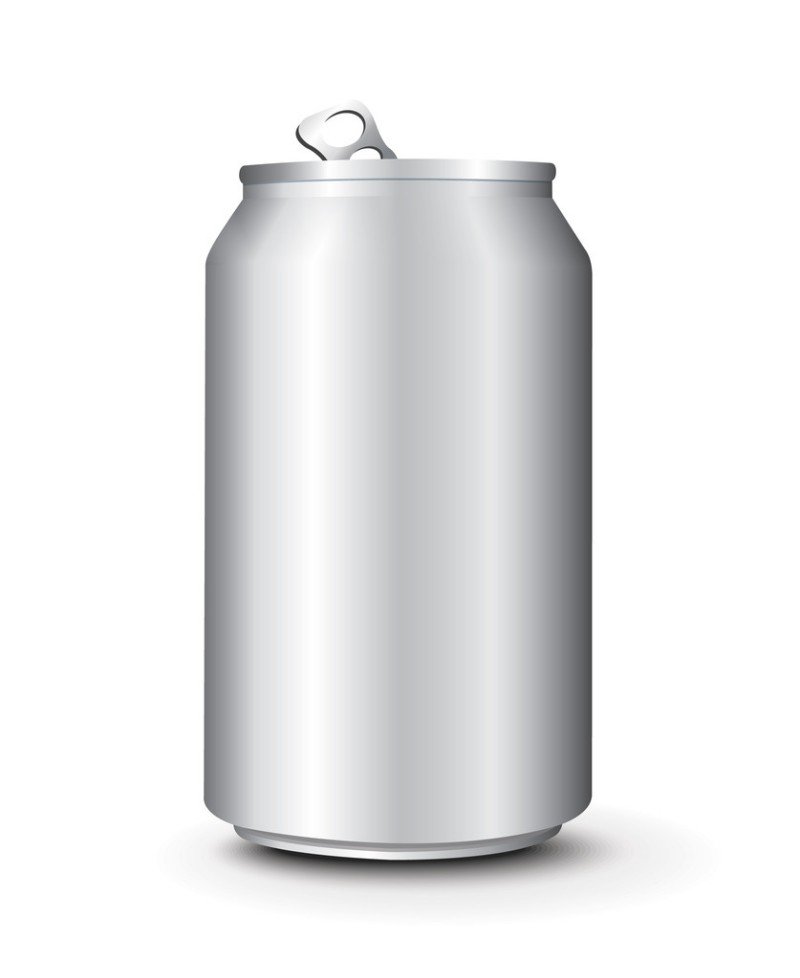
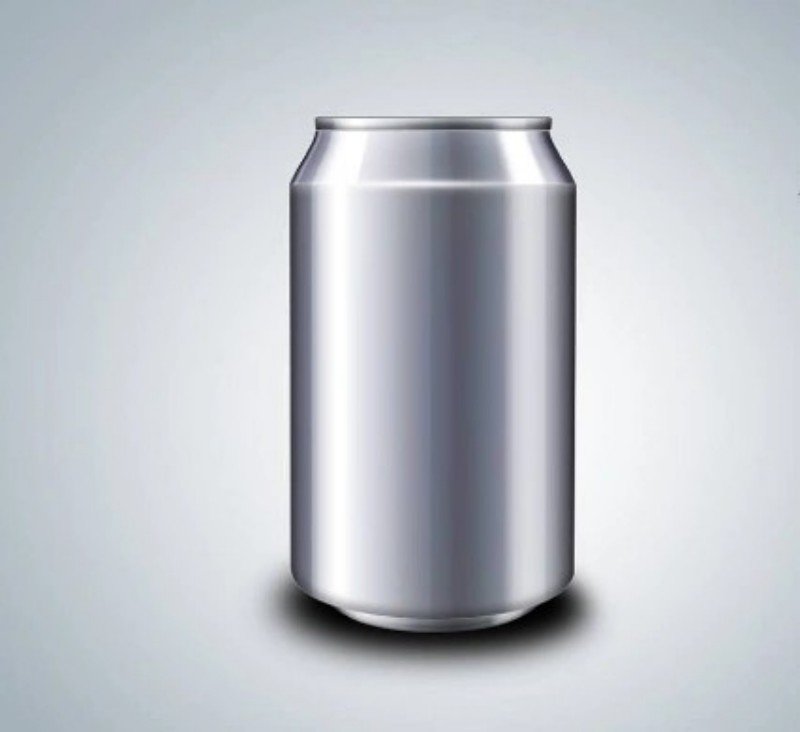
Custom two-piece aluminum beverage cans from 150 to 500 ml, produced by draw-and-wall-ironing (DWI) from food-grade aluminum with a water-based BPA-NI inner coating. Choose brite (uncoated, mirror-shiny) cans ready for labeling, direct dry-offset printing in up to 8 colors, or full-graphics shrink sleeves — with standard 200/202 ends and stay-on tabs that fit every commercial seamer.
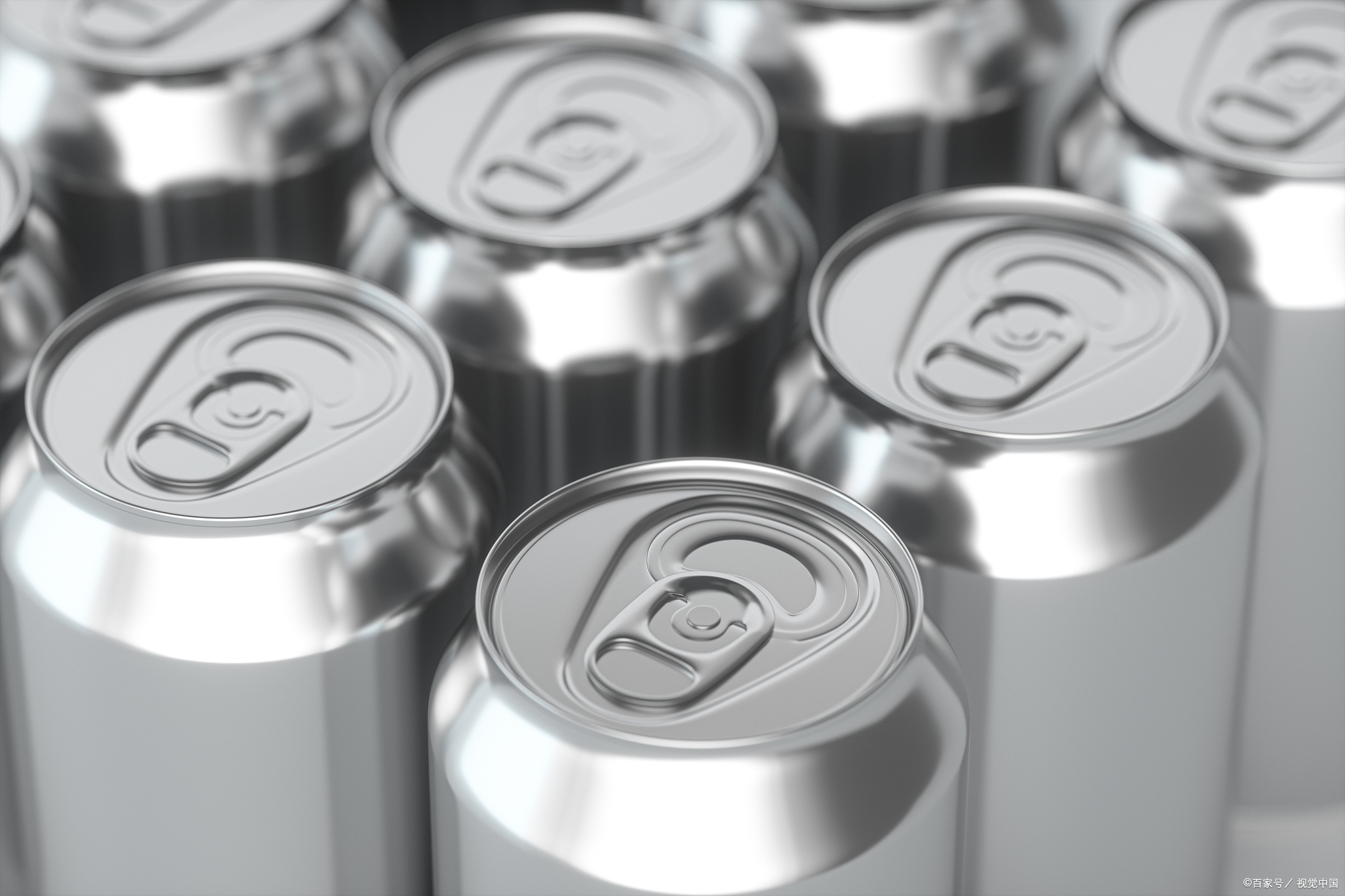
The can is the most recycled drink package on earth — infinitely recyclable, back on the shelf in about 60 days — and the fastest-growing format in craft beverage, coffee, wine and sparkling water. It protects contents from light and oxygen completely, chills in minutes, ships without breakage, and carries graphics better than almost any other package. MOQ starts at 2,000 units for brite cans and sleeved cans: craft-batch quantities that let a new brand test a SKU without a container-load commitment. Fully direct-printed cans carry the industry’s standard high minimums (see the honest note below) — and for most small and growing brands, the brite-plus-sleeve route delivers the same shelf impact at a fraction of the entry cost.


Brite vs. Printed vs. Sleeved
Brite Cans
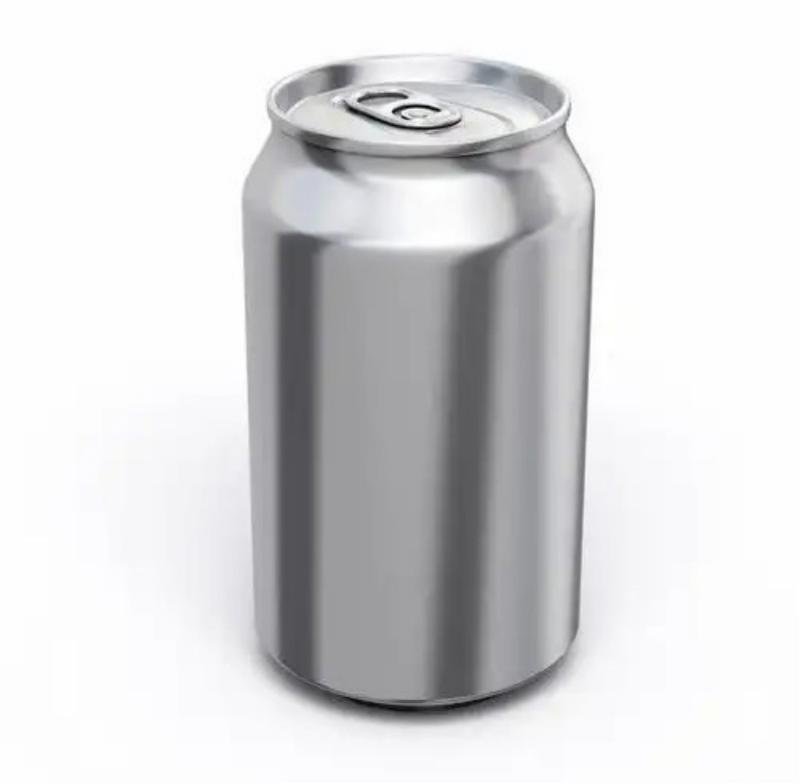
The blank canvas. Uncoated, mirror-bright aluminum with no basecoat — the classic craft-brewery look.
Brand it with: shrink sleeve (full 360° graphics), pressure-sensitive label, or direct screen print.
Why brands start here: 2,000-unit MOQ, no plate costs, artwork can change every batch.
Printed Cans
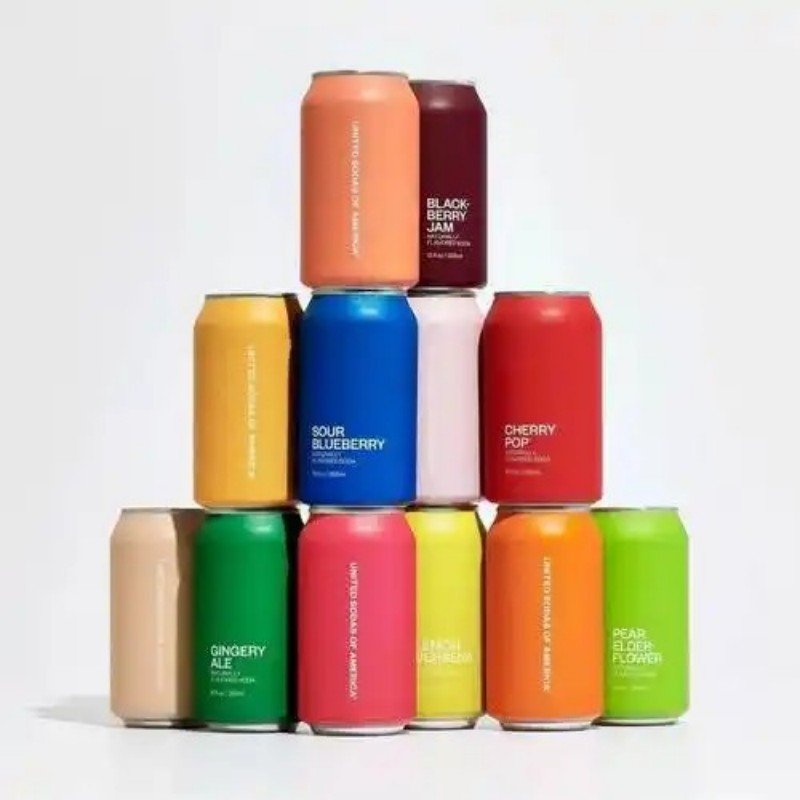
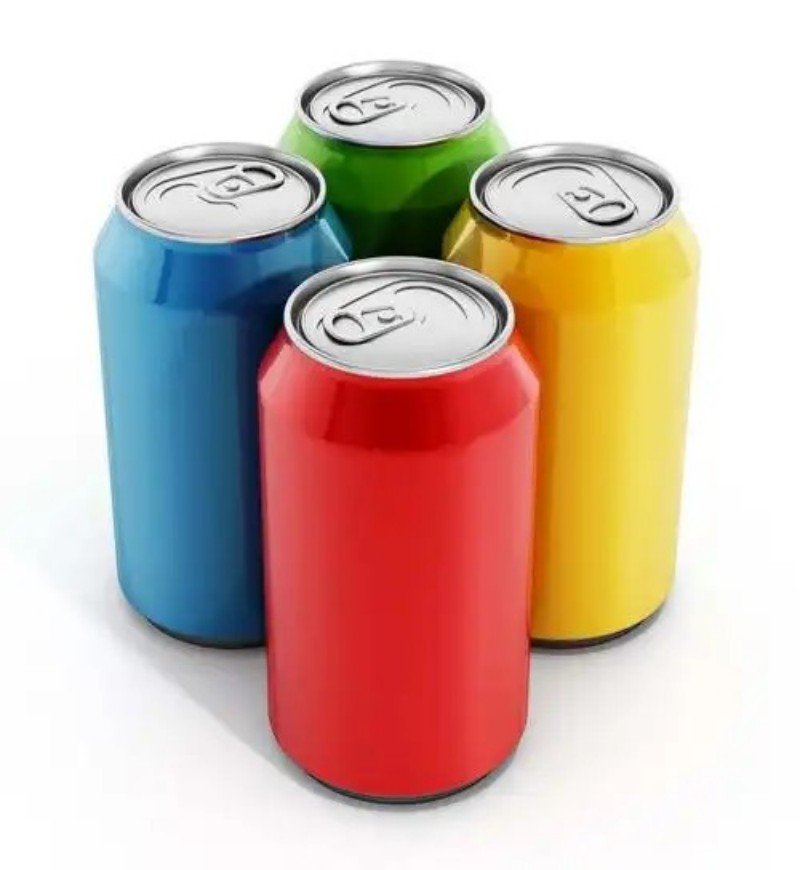
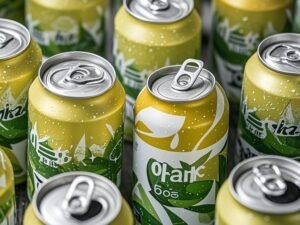
The finished billboard. Basecoat color plus 1–8 dry-offset ink colors printed directly on the can wall, with glossy or matte varnish.
Why it wins at scale: lowest per-can decoration cost, no label to peel, print under the tab and around the rim.
Entry point: typically ~100,000+ cans — quoted per project.
Specifications
| Attribute | Detail |
|---|---|
| Product name | Custom Aluminum Beverage Cans — Brite & Printed |
| Construction | Two-piece DWI (draw & wall-ironing) aluminum can + separate end |
| Material | Aluminum alloy 3104 (body) / 5182 (end); food-grade |
| Volumes | 150, 250, 310, 330, 355, 440, 473, 500 ml; custom tooling available |
| End / neck finish | 200, 202, 206 CDL / CDL-C stay-on tab ends; classic stay-on tab standard |
| Inner coating | Water-based food-grade lacquer, BPA-NI (non-intent) |
| Decoration | Brite (no coat) · direct dry-offset 1–8 colors + varnish (gloss/matte/tactile) · shrink PET sleeve · PS labels |
| Basecoat colors | Any Pantone-matched basecoat under print; silver brite or custom |
| Printing extras | Under-tab print, rim print, thermochromic ink, tactile (embossed-varnish) effects |
| Fill compatibility | Carbonated (up to ~4.5 vol CO₂), still, cold-brew, wine, kombucha, energy drinks |
| Shelf life | Up to 9–12 months (sensitive contents: specify — we match coating system) |
| Packaging | Trays + shrink, or cartons; sleeves for ends; export-stacked pallets |
| Certifications | Produced under FDA-audited quality system; food-contact; ISO partner network (FDA/LFGB/REACH/RoHS/FSC/BSCI across group) |
| MOQ | 2,000 units (brite / sleeved / hybrid-printed) · direct-printed cans quoted per project (~100k+) |
| Lead time | 15–25 days after spec approval |
| Sample | Free brite samples; printed/sleeved pre-production samples from artwork |
Size & End Guide
| Volume | Typical Body Ø | End | Best For |
|---|---|---|---|
| 150 ml | ~52 mm | 200 | Energy shots, cocktail mixers, sampling |
| 250 ml | ~57 mm | 200 | Juices, kombucha, kids’ drinks |
| 310 ml | ~58 mm | 202 | Sleek craft sodas, sparkling water |
| 330 ml | ~66 mm | 202 | The global standard — beer, soda, seltzer |
| 355 ml | ~66 mm | 202 | North American standard |
| 440 ml | ~73 mm | 202 | UK/Irish craft beer & cider pint cans |
| 473 ml | ~73 mm | 202 | US tallboy, craft beer, cold brew |
| 500 ml | ~66–73 mm | 206 | Large-format beer, RTD cocktails, iced coffee |
Branding Routes — Pick by Volume, Not by Taste
| Route | How | MOQ Reality | Best For |
|---|---|---|---|
| Shrink sleeve | PET film printed 360°, shrunk to the can body | From ~2,000 | Startups, seasonal SKUs, many designs in one batch |
| PS label | Adhesive label on brite can | From ~2,000 | Minimalist looks, tiny batches |
| Direct print (hybrid/digital) | Digital or small-batch direct decoration on brite cans | Quoted — small runs possible | Premium small runs, variable data |
| Direct dry-offset print | Basecoat + up to 8 inks via rotating blanket (image 3 look) | ~100,000+ | Established brands at volume — lowest cost per can |

How a Can Is Made
- Cupping. Aluminum coil is punched into shallow cups — the starting form of every DWI can.
- Draw & wall ironing. The cup is drawn deeper and the wall is ironed thin between rings, stretching it into a tall can. Wall thickness drops from ~0.3 mm to ~0.1 mm — strength comes from work-hardening, not bulk.
- Trimming & washing. The rim is trimmed true, and cans are washed to strip rolling oils — ready for coating.
- Coating & baking. Water-based food-grade lacquer (BPA-NI) lines the inside; exterior basecoat is applied if printing follows. Each layer cures in an oven.
- Printing (if direct). A rotating blanket cylinder picks ink from plates and offsets up to 8 colors onto the spinning can in one pass — then varnish (gloss, matte or tactile) locks it in.
- Necking & flanging. The top is necked down to the end diameter and flanged to accept the end — the geometric precision here is what makes seaming possible.
- Testing. Every production lot passes pressure, coating-integrity and dimensional tests before palletizing.

Filling & Seaming Rules — Where Can Orders Actually Fail
- Match the end to your seamer. 200/202/206 — confirm with your canning line, request seaming-trial samples, and keep the seamer rolls set to spec.
- Inspect seams on the first run. A double seam has measurable overlap and tightness — teardown checks at start-up and every hour prevent the classic “flat beer” complaint.
- Rinse cans inverted before filling. Dust from transport lands inside even in sealed sleeves.
- Respect dissolved-oxygen limits. Can or not, O₂ pickup at filling decides shelf life; purge with CO₂ for sensitive beverages.
- Handle with care after filling. Warm cans plus rough conveyor edges scuff basecoat and print — pad contact points on the line.
Applications
| Use Case | Recommended Setup | Why |
|---|---|---|
| Craft beer & cider | 330–500 ml brite + sleeve | Batch-flexible artwork; full-graphics shelf presence |
| Cold brew & iced coffee | 250–473 ml, still-grade coating | Blocks light that degrades coffee flavors |
| Sparkling water / soda | 310–330 ml, carbonation-grade | Holds pressure; chills fast |
| RTD cocktails | 150–355 ml, printed under-tab | Premium look, portion control |
| Wine & spritz | 250–355 ml sleek | Single-serve format growing fastest in wine |
| Kombucha & functional drinks | 250–330 ml | Light and oxygen barrier protect live cultures |
| Energy shots & mixers | 150 ml, 200 end | Compact, strong branding on small body |
Aluminum Can vs. Glass Bottle vs. PET Bottle
| Dimension | Aluminum Can | Glass Bottle | PET Bottle |
|---|---|---|---|
| Light protection | 100% opaque | Only amber/cased | Poor — UV degrades contents |
| Oxygen ingress | Zero | Near-zero (crown cap) | Slow ingress over months |
| Chilling speed | Fastest | Slowest | Medium |
| Shipping weight | Light (~13–25 g empty) | Heaviest — freight killer | Light |
| Breakage | None | Real risk | None |
| Perceived value | High (craft-era premium) | Traditional premium | Volume/everyday |
| Recycling | Infinitely recyclable, ~60-day loop | Infinitely recyclable | Downgrades each cycle |
| Brand graphics at low volume | Sleeve from 2,000 | Label from small runs | Sleeve from small runs |
| Best role | Craft & on-the-go premium | Traditional premium & cellar-aged | Hydration volume |
The Recycling Story — Your Can Is a Marketing Asset
Aluminum is infinitely recyclable with no loss of quality; a recycled can can be back on the shelf in about 60 days. Roughly three-quarters of all aluminum ever produced is still in use today. For beverage brands this is not just compliance — it is a shelf-and-social story: “infinitely recyclable,” high scrap value (which drives real collection rates, unlike most plastics), and a materially lower carbon footprint when made with recycled content. We can supply cans with documented recycled content percentages on request — ask for it in your quote.
Frequently Asked Questions
What is the MOQ, and what can I get at 2,000 units?
2,000 units covers brite cans and sleeved or labeled cans in standard sizes — the craft-batch entry point. Direct dry-offset printed cans (like full-graphics printed stock) carry the industry’s standard high minimums, typically from ~100,000 cans, and we quote those per project honestly rather than overpromising.
Which end size do I need — 200, 202 or 206?
It depends on your seaming machine, not preference. Check your canning line’s spec or ask us for samples of each; we provide matching ends for a seaming trial before you commit to a full order. This is the single most common can-order mistake, and it’s avoidable in one email.
Can you match our brand color on the cans?
Yes. Direct-printed cans use any Pantone-matched basecoat plus up to 8 ink colors. For lower volumes, shrink sleeves achieve any color and full photographic graphics from 2,000 units.
Are the cans food-safe? Is there BPA?
The inner coating is a water-based food-grade lacquer in BPA-NI (BPA non-intent) formulation, and cans are produced under our FDA-audited quality system. Coating documentation is available with your order.
Can the cans handle carbonated beverages?
Yes — DWI aluminum cans are engineered for internal pressure and hold up to roughly 4.5 volumes of CO₂. Specify your carbonation level when quoting so we confirm the end and coating spec.
Do you supply the ends/lids too?
Yes — stay-on tab ends matching your neck finish (200/202/206) are supplied with the cans, packed in sleeves. One order, one shipment, matched parts.
How should cans be stored before filling?
Cool, dry, and sealed until use. Palletized cans should stay in their shrink-wrapped trays until they reach the depalletizer — open-air storage invites dust that ends up in your rinse water or, worse, in the drink.
What artwork do you need?
Vector files (AI/EPS/PDF) with fonts outlined. For direct printing we convert your design to the 8-color offset layout and send a pre-production sample; for sleeves, we provide the die-line template so your designer wraps artwork around the exact can dimensions.
What is the lead time?
15–25 days after spec approval for brite and sleeved cans. Direct-printed orders follow the can maker’s production schedule — quoted per project.
OEM & Our Services
JAJA Packing is a packaging supply-chain integrator based in Huzhou, China, coordinating 1,200+ audited partner factories. One accountable contact handles spec development, sampling, QC and export — from a 2,000-can craft batch to full containers.