Why Tins Are Kept, Not Binned
The barrier is perfect. Metal is the only packaging material that blocks light, oxygen and moisture completely — no laminate layer does it better. Tea keeps its aroma for months, cookies stay crisp, candles don’t sweat. For content that degrades in light, tin beats every transparent option by default.
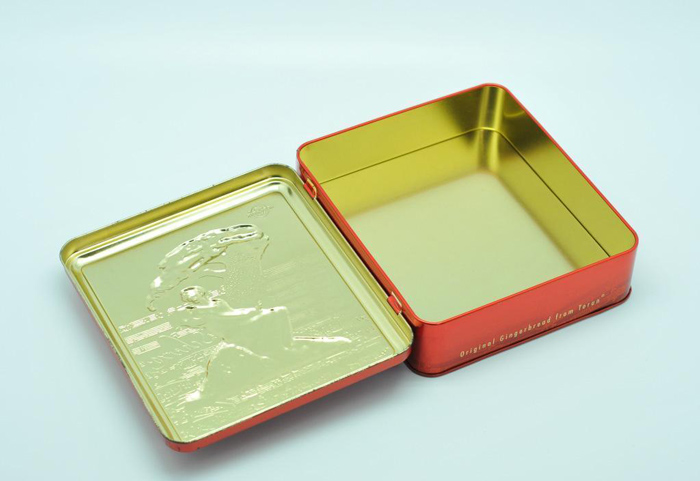
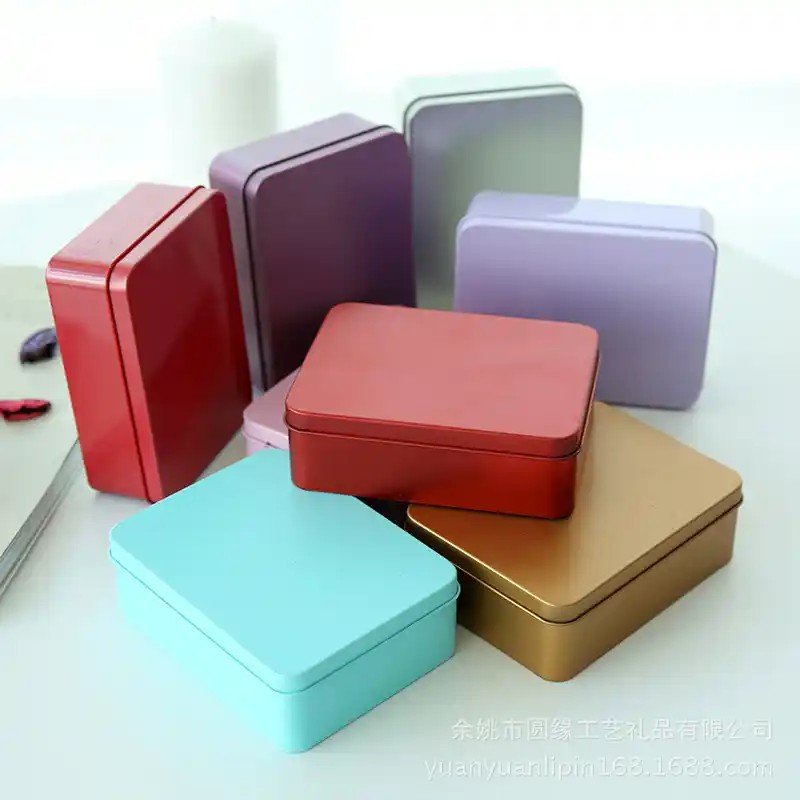
The afterlife is the marketing. A well-designed tin becomes a sewing box, a tea caddy, a desk drawer. It sits in the customer’s home with your logo on it for years — no other packaging format has that persistence. This is why heritage brands (tea, biscuits, confectionery) have used tins for a century: the tin is the brand artefact.

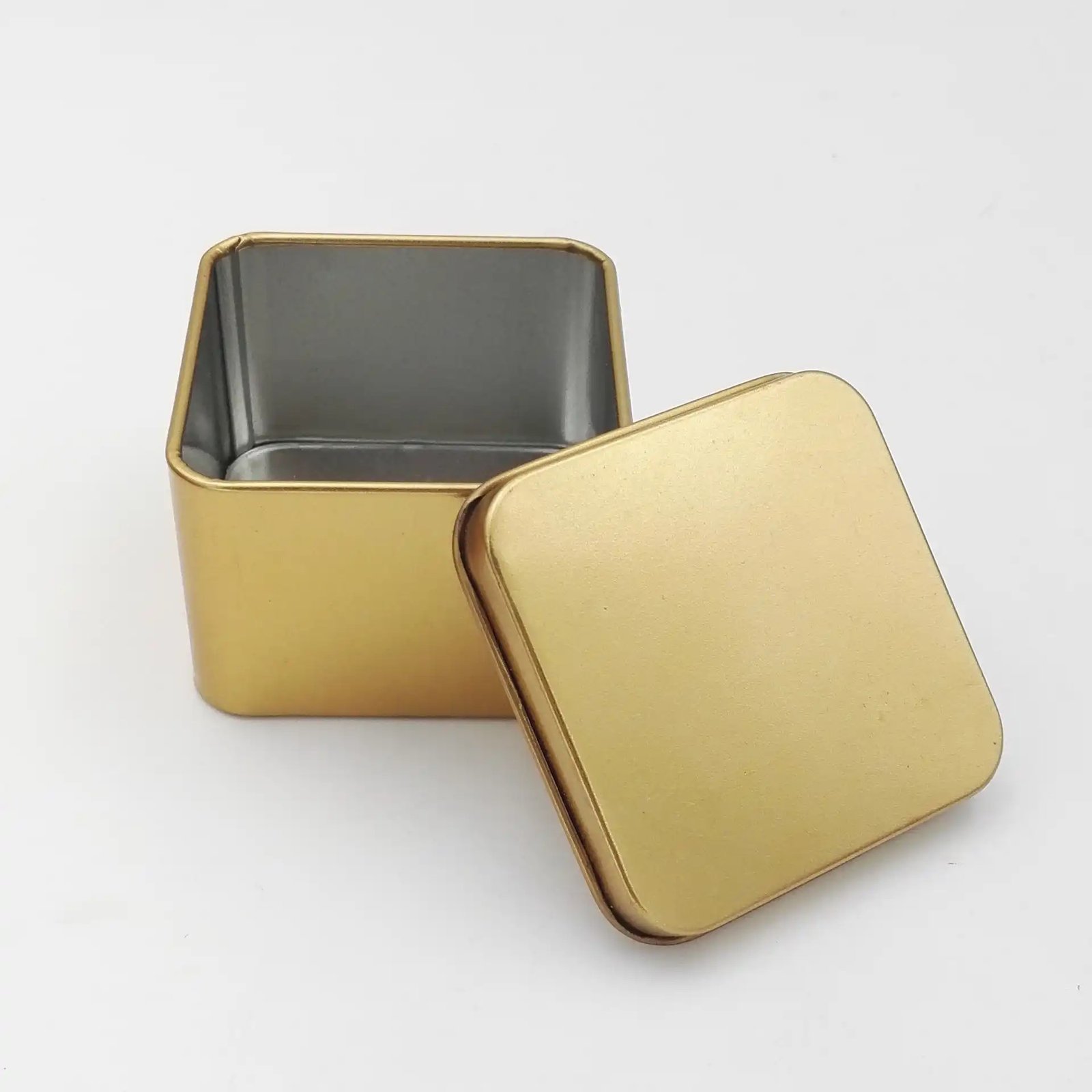
The photo tells the story. The gold slip-cover tin above is the best-selling formula: bare metallic plate, no print on the body, one debossed or printed logo on the lid. It photographs like jewellery, costs less than a fully printed tin, and the silver food-grade interior visible when opened signals quality the moment the lid slides off.

Specifications
| Attribute | Detail |
|---|---|
| Product | Custom tinplate boxes: slip-cover, hinged, pressure-lid and window tins |
| MOQ | 100 pcs per design on stock tooling; new tooling from 5,000–10,000 pcs |
| Material | Electrolytic tinplate steel 0.20–0.30 mm (0.23 mm standard) |
| Inner coating | Food-grade lacquer, FDA & EU food-contact compliant; BPA-free options; enhanced lacquer for acidic/high-fat contents |
| Plate finish | Gold, silver, chrome, matte black, white printable base |
| Printing | CMYK offset on metal + white undercoat; Pantone spot; metallic inks |
| Varnish | Gloss, matte, textured (wrinkle/leather), soft-touch |
| Embossing | Raised or debossed logo/pattern, in-tool or secondary operation |
| Size range | 40×40×20 mm mint tins to 200×200×100 mm gift tins; rounds Ø40–150 mm |
| Closures | Slip-cover, pressure-fit, hinged, window lid, neck-through |
| Inserts | Vacuum-formed PET/PP trays, EVA foam, paperboard platforms, fabric pads |
| Sealing (if required) | Induction seal membrane under lid for aroma-critical contents |
| Safety | Rolled safety edges (no sharp rims), food-contact-certified surfaces |
| Eco | Steel — infinitely recyclable, magnetically recovered; recycle logo free |
| Artwork | AI / PDF / EPS; metal printing proof (photo or physical) before bulk |
| Lead time | 15–20 days stock tool + print · 25–35 days new tooling + production |
| Shipping | Nested, palletised; moisture-barrier cartons + desiccant for sea freight |
| Payment / Incoterms | T/T, PayPal; EXW / FOB Ningbo–Shanghai / DDP on request |
Tinplate & Coatings — What You’re Actually Buying
Tinplate is steel electroplated with a micro-layer of tin: steel gives strength and formability, tin gives corrosion resistance and food safety. Three coating decisions shape the final product:
| Coating choice | What it does | Choose when… |
|---|---|---|
| Gold / silver plate (bare) | The metal colour is the design — print only what’s needed | Premium minimalism, like the photo: gold body, deboss, done |
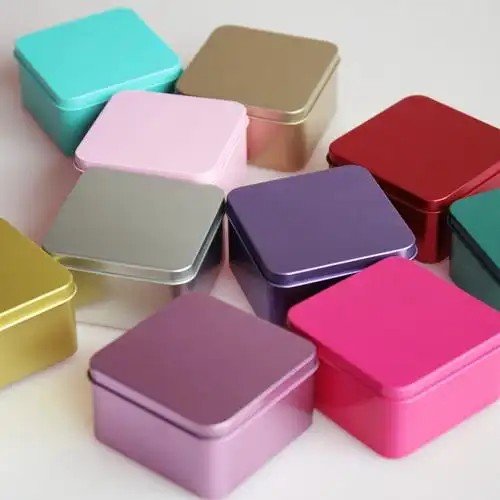
| White base coat | Printable ground that makes CMYK colours accurate on metal | Full-colour artwork, photographic prints, brand-colour bodies |
| Food-grade inner lacquer | Isolates contents from metal; prevents metallic taste and reaction | Always, for food — spec enhanced lacquer for acidic (fruit, tomato) or high-fat contents |
Lid & Closure Options
| Closure | Mechanics | Best for | Relative cost |
|---|---|---|---|
| Slip-cover (sliding sleeve) | Outer sleeve slides over inner body; smooth, slow “reveal” moment | Gift tins, premium tea & confectionery (the photo’s style) | Medium |
| Pressure-fit lid | Snaps over the body rim with an audible click | Candy, mints, candles, craft supplies | Lowest |
| Hinged lid | Metal hinge keeps lid attached through repeated opening | Storage tins, workshop use, anything opened daily | Higher |
| Window lid | PVC/PET window lets the product sell itself | Cookies, confectionery, craft retail | Medium |
| Neck-through | Body narrows to a dispensing neck with cap | Spices, sprinkles | Higher |
Selection shortcut: opened once at gifting → slip-cover; opened occasionally → pressure lid; opened daily → hinged. Mismatch the closure to the use and the “kept tin” effect dies — a hinged hinge that loosens in a month reads as cheap regardless of how good the print is.
Stock Sizes & Tooling — How MOQ 100 Works
Tins are stamp-formed over tooling, and tooling is where the money is. That’s why our MOQ story has two paths:
| Path | MOQ | Tooling | Lead time |
|---|---|---|---|
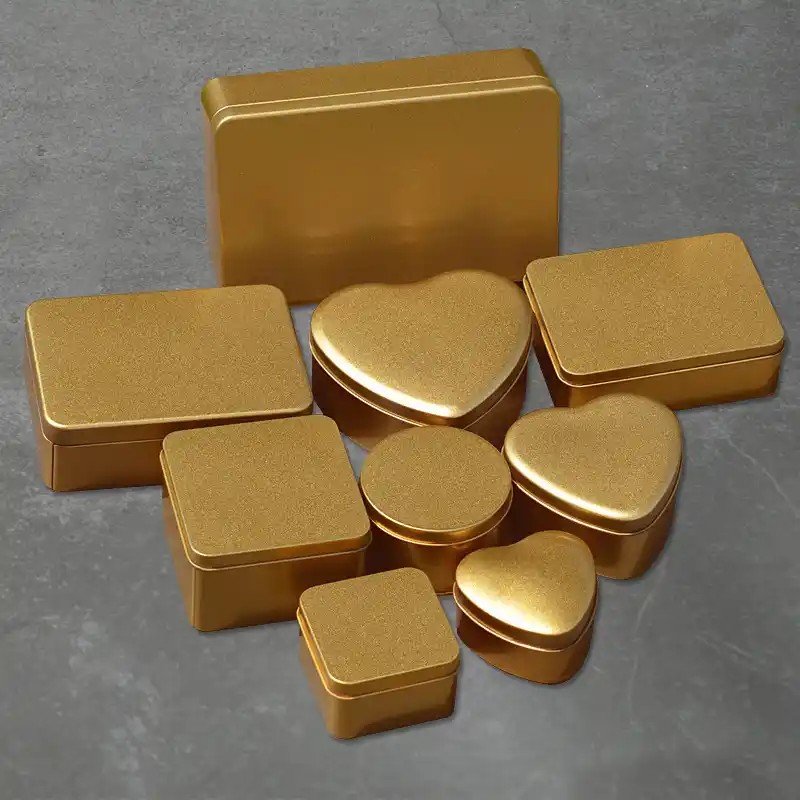
| Stock mould + your print/emboss | 100 pcs | None — hundreds of existing moulds: squares, rects, rounds, ovals, hearts | 15–20 days |
| Fully custom size/shape | 5,000–10,000 pcs | New stamping tool (~25–35 days), tool is yours, stored free | 40–55 days total |
| Stock size (mm) | Typical use |
|---|---|
| 40×40×20 / Ø40×20 | Mints, pill & party favours, mini candles |
| 60×60×40 / Ø60×45 | Loose tea, spices, jewellery, earbuds |
| 75×75×50 / Ø75×50 | Candy, cookies (stacked), small candles |
| 95×95×60 / Ø100×70 | Tea gift sets, biscuit rounds, cosmetic sets |
| 120×90×60 | Cookie & brownie tins, stationery sets |
| 150×105×45 | Pencil/stationery tins, chocolate bars, playing cards |
| 200×200×100 | Large gift tins, multi-item hampers |
Printing on Metal
| Technique | Effect | Note |
|---|---|---|
| CMYK offset + white undercoat | Full photographic colour on tin | White base essential for true colours; without it, metal greys everything down |
| Pantone spot | Exact brand colour across batches | Logged per batch for reorder consistency |
| Blind emboss / deboss | Logo pressed into bare metal, no ink | On gold/silver plate it reads as premium tooling — the photo’s formula |
| Textured varnish | Wrinkle / leather / soft-touch feel | Transforms a flat tin into something people keep stroking |
| Matte / gloss varnish | Final protection and sheen control | Standard on all printed tins |
| Inside printing | Brand message revealed on opening | Small cost, memorable moment — popular for gifts |
Rust, Scratches & Care — The Honest Section
Tinplate is tin over steel. The tin layer protects, but honesty sells better than silence:
- Deep scratches that expose bare steel can rust in humidity. Normal handling doesn’t do this — the tin layer caps the cut edges — but dragged pallets and scuffed carton rims can. We pack nested tins in moisture-barrier cartons with desiccant for sea freight.
- Store dry, off damp floors. A tin stored in a damp basement will eventually show surface oxidation at the most scratched point — same rule as your steel cookware.
- Cut edges are protected. Stamp-and-roll construction folds the tin layer over cut edges, which is why normal rim wear doesn’t spread rust. Check that any supplier’s tins have rolled, not raw-cut, rims — ours always do.
- Wipe, don’t soak. For reusable tins: hand-wipe the exterior; the food lacquer interior tolerates rinsing and full drying, not dishwashers.

How Your Tins Are Made (10 Steps)
- Spec & mould selection — content, closure, size; we send the stock mould list with photos.
- Artwork proof — print layout on the actual 3D dieline of the chosen mould.
- Metal printing proof — colour proof on tinplate; metal shifts colours vs paper, so this step is not optional.
- Sheet printing — CMYK/spot + white undercoat on tinplate sheets, then varnish.
- Curing — printed sheets baked to harden ink and lacquer.
- Cutting & stamping — blanks cut; bodies and lids stamp-formed over tooling.
- Welding & rolling — body seams welded, rims rolled for the safety edge.
- Inner lacquer — food-grade interior coating applied and cured.
- Assembly & QC — slip test on covers (no rattles, smooth slide), seam check, lacquer integrity, drop test sample.
- Nest, pack & ship — nested with interleaves, moisture-barrier carton, desiccant for sea.

Applications
| Industry | What we supply |
|---|---|
| Tea & coffee | Rounds & squares with aroma-critical sealing, inner lacquer, caddy designs |
| Confectionery & bakery | Pressure-lid candy tins, window cookie tins, seasonal gift prints |
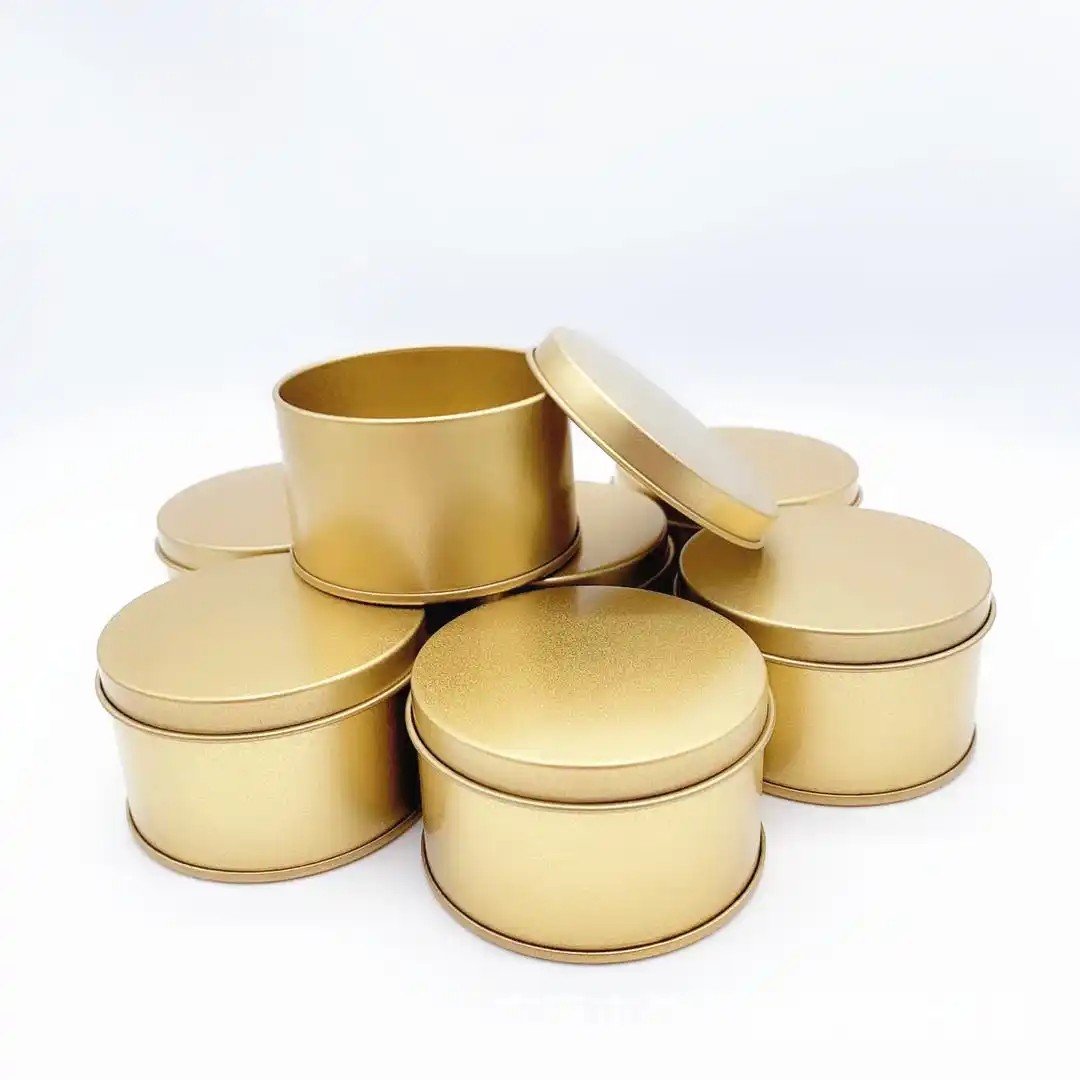
| Candles | Rounds with pressure or slip lids, enhanced lacquer for wax & fragrance oils |
| Cosmetics & skincare | Balm & salve tins, mini rounds, soft-touch finishes |
| Gifts & hampers | Large slip-cover tins with PET inserts, embossed lids, inside printing |
| Stationery & keepsakes | Pencil tins, playing-card tins, storage tins with hinged lids |
Tin vs Rigid Paper Box vs Glass Jar
| Dimension | Tin box | Rigid paper box | Glass jar |
|---|---|---|---|
| Barrier (light/air/moisture) | Perfect | Needs liner | Perfect (glass) but lid is the weak point |
| Breakage in shipping | None — survives compression | Crush/dent risk | Real risk, needs protective pack |
| Perceived value | Highest (“keepsake” material) | High | High |
| Unit cost (stock tool, 100+) | US$0.35–3.20 | US$0.45–3.50 (from 300) | US$0.12–1.30 |
| Custom size at low volume | No — stock tool or 5k+ new tool | Yes — die-cut to any size from 300 | No — stock tool or ~10k new tool |
| Print quality | Offset on metal, extremely durable | Full menu incl. foil/letterpress | Screen/ceramic only |
| Reusability afterlife | Years — becomes storage | Months | Years — refills |
| Weight / freight | Moderate | Lightest | Heaviest |
| Recyclability | Steel — magnetically recovered | Paper stream | Glass stream |
| Best role | Premium keepsake, aroma-critical, gift sets | Seasonal gift, custom-size agility | Visible content, artisan food |
Portfolio answer: tins for the hero/keepsake SKU, paper boxes where sizes change every season, glass where the product itself should be seen. We supply all three — see our gift boxes and glass jars for the companions.
Frequently Asked Questions
What is the minimum order quantity?
100 pieces per design on stock tooling — our factories hold hundreds of existing moulds with no tooling cost, so short runs are real, not theoretical. Fully custom sizes need new stamping tooling, economical from 5,000–10,000 pcs; for smaller volumes the stock-tool + custom-print route delivers the effect at a fraction of the cost.
Is the tin food-safe for tea, candy and cookies?
Yes — every food tin carries a food-grade inner lacquer (FDA & EU compliant, BPA-free options) isolating contents from metal. Acidic or high-fat contents get an enhanced lacquer system; tell us what goes inside.
Can the tin be printed in full colour, or only gold and silver?
Full CMYK offset on tinplate is standard, over a white base coat. Gold and silver come from the plate coating itself (like the photo) or metallic inks. Blind emboss on bare plate is the most elegant premium combination.
What lid styles are available?
Slip-cover (smooth gift reveal, like the photo), pressure-fit (candy classic), hinged (daily use), window lids, and neck-through dispensing designs. Rule of thumb: gifting → slip-cover; occasional → pressure; daily → hinged.
Will the tin rust?
Only if bare steel is deeply exposed and kept humid — normal handling doesn’t reach that. We ship nested in moisture-barrier cartons with desiccant; store dry and the tin outlives the product. Rims are rolled (not raw-cut) so edge wear doesn’t spread.
Can I get an embossed logo?
Yes — emboss/deboss in-tool on new tooling at negligible cost, or as a secondary operation on stock tins. A blind deboss on gold plate is our most-ordered premium treatment.
Can you match a custom size?
Yes with new tooling (5,000–10,000 pcs economical, tool is yours, stored free). Under that, closest stock size + custom print/emboss/insert usually achieves the goal — most buyers are surprised how bespoke a stocked tin looks once finished.
What is the lead time?
15–20 days for stock tool + print; 40–55 days total for new tooling plus production. Express 5–8 days, sea 25–35 days. Tins ship nested and palletised — far more robust than glass.
Are tins recyclable?
Tinplate is steel — infinitely recyclable and magnetically recovered even from mixed waste. Add the afterlife effect (a tin that becomes storage keeps your brand at home for years) and metal is the strongest sustainability-plus-marketing story in rigid packaging.
OEM & Our Services
JAJA Packing is a packaging supply-chain integrator based in Huzhou, China, coordinating 1,200+ audited partner factories. Tins, boxes, jars and inserts in one order — one contact, one invoice.
| Service | Detail |
|---|---|
| Free mould list | Photos + dimensions of hundreds of stock moulds; samples on request |
| MOQ | 100 pcs on stock tooling; new tooling from 5,000–10,000 pcs |
| Proofing | Metal printing proof before bulk — colour on tin differs from paper, we prove it |
| Compliance | FDA / EU food-contact inner lacquer, BPA-free options, MSDS on request |
| Inserts | Vacuum trays, foam, paperboard platforms fitted to your product |
| Matching sets | Tins + boxes + labels + tags colour-matched in one order |
| Reorders | Tooling, plates and artwork stored free — reorder in one message |
| Shipping | Nested packing, moisture-barrier cartons + desiccant; EXW / FOB / DDP |
Contact: sales1@jajapacking.com · WhatsApp +86 131 2388 3167